In the small, Eastern Washington town where I grew up, someone spray painted the words, “OZZY KNOWS LISTEN”* on an overpass. The words were already up there, in huge black letters by the time I learned to read, about 1984, and they stayed until our family moved away in 1991.
I’ve been thinking about those words in the week since Ozzy’s death. In those first few moments after seeing the headline, I thought about what song I wanted to share on my Facebook feed. Not Crazy Train. Everyone would be playing that. Mr. Crowly? It was one of my favorite songs when I was a teenager, and one I’ve been listening to on repeat since Jack Black did his fabulous cover a few weeks before at Ozzy’s last concert. Bark at the Moon? A great song from an album of the same name. As a kid, I’d been mesmerized by the cover.
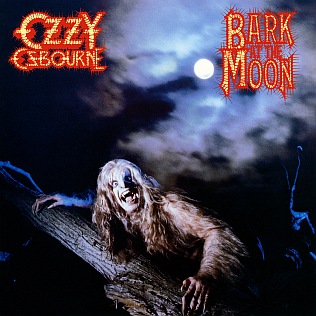
No, I’d share Black Sabbath, the song that ushered in the Heavy Metal genre, on the album of the same name, by the band of the same name. With Ozzy’s haunting voice, over what guitarist Tony Iommi describes as a wall of sound, nightmarish lyrics about a figure in black coming for Ozzy. It would go on to inspire generations of musicians to come.
As Geezer Butler, Black Sabbath’s bassist, said in his goodbye Facebook post to Ozzy, “4 kids from Aston- who’d have thought, eh?” Not bad at all.
My social media feed has filled with musicians and industry insiders offering tributes to the Godfather of Heavy Metal. I’m neither of these. I’m just a kid who took some graffiti advice and listened to Ozzy. Or rather, I should say, it was my older brother who took the advice. I first heard Ozzy’s maniacal laughs, piercing wails, and haunting melodies on a cassette player in his room.
My first published essay was about growing up in a strict religion during the Satanic Panic and listening to heavy metal. The journal in which it appeared has now gone defunct, which is a blessing. Not long after it came out, I began to think of edits I would like to make. I want to get this story right. The original publication was a dress rehearsal. The official performance can still happen.
Of course Ozzy showed up in that essay. How could he not? Seventh-day Adventist kids had a fascination with Ozzy, even when they didn’t particularly like the music. Kids at my Adventist boarding school said that a young John Osbourne, in need of reform, was sent to our school for a brief stint before being kicked out. I’ve heard the same story from every Adventist boarding school from California to Nebraska. I’d bet I’d hear it from kids on the East Coast and kids in the South. There’s just something about Ozzy!
Most of the kids telling this story weren’t metal heads and I don’t know if it was anything more than a hilarious irony of the scariest figure of the Satanic Panic had lived among us. According to stories, he even came up with the name Black Sabbath while forced to attend Sabbath services at school. I admit, I delighted in this myself.
But as an Ozzy fan, it was more than that. I loved the idea that he’d come through the same restrictive environment I was living in and left with one of the most iconic voices in rock and roll. I grew up knowing that nothing I said mattered. I figured this out by watching my older siblings. If they questioned the arbitrary rules in our Adventist world, if they called out the hypocrisy all around us, they got a patronizing pat on the head at best, and at worst, they’d be punished. I was smart. I learned to avoid this all by staying silent.
That’s what I saw in the four boys from Aston, an economically depressed factory town that didn’t matter. They made music that demanded people listen. Even when they hated it, they couldn’t ignore it. And from that group, it was the least important voice of all that we heard the loudest, the guy who dropped out of school at fifteen and couldn’t hold down any other job.
What I now find so inspiring about Ozzy is his struggle to find that voice. As a young man, just starting out in Black Sabbath, he didn’t know if he could sing at all. He listened to records, tried to learn all he could, and began to develop his own style.
The band’s first manager, Jim Simpson said, “Like Jimmy Rushing, he had this voice that started somewhere in his stomach and it came out, in the nicest possible way, as a bellow. It was a big voice … but he was very much lacking in confidence and needed to be bolstered all the time and told he could do it.”
The insecurity continued even after he found commercial success. In 1986, the up-and-coming metal band, Metallica, opened for Ozzy on his Ultimate Sin tour. Backstage, Ozzy heard the band playing Black Sabbath, and he assumed they were making fun of him. When people tried to tell him that they idolized Black Sabbath, Ozzy didn’t believe it.
As he says, “I couldn’t understand, but nobody would tell us until years later and every band would come up to me and say, ‘If it wasn’t for you and Black Sabbath we wouldn’t be here today.’ I had no idea. None of us did.”
At the Back to the beginning concert, metal bands, from huge headlining megastars to newer acts just beginning to grow, paid tribute Black Sabbath. Metallica’s James Hetfield put it best when he said, “Thank you, boys,” he said, “for giving us a purpose in life.”
In the midst of the Satanic Panic, the adults in charge could never have seen heavy metal as a purpose in life; they couldn’t see any value in it at all. It’s understandable that the music scared the adults. The shock, after all, was half the fun. It’s just a shame that they let their fears get out of control, and the kids they were trying to protect became collateral damage.
Metal heads often talk about how they felt like outsiders growing up. Their parents, teachers, even their peers thought they were weird—or worse, morally compromised—for liking music that’s too loud, too angry, too dark. Then they go to concerts and find out they’re not alone. There is a whole community of people who share their tastes.
Over the past month, watching that community come together once again has brought me to tears, the images of the packed house for the Back to the Beginning concert, the crowds who spontaneously gathered in Birmingham to mourn Ozzy’s death last week, and again yesterday to watch his funeral procession. All of it an outpouring of love from people who were often dismissed as damaged.
Ozzy spoke, and we listened. We’re still listening.
*I first wrote: “OZZY SPEAKS LISTEN,” but my sister reminded me that it was “KNOWS.”
 Vegetarian Ranchwife
You have opened my eyes to why there has been such a surge of emotion at Ozzy’s passage. I was affected by different artists, in a different time. You have shown me an entirely new side of Ozzy’s fame.
I hope someday you write about the Satanic Panic period from your point of view. I’m intrigued, and maybe we can learn from history? (Doubtful, but what the heck… 🙂 Great post and I can tell it comes from the heart.
LikeLiked by 1 person
I didn’t expect to get so emotional after his death. It has a lot to do with the perfectly timed, Back to the Beginning concert. When they said it was his last concert, I don’t think anyone thought he was as close to the end as he was, although the other performers knew. He used to say that his tombstone would read his birth and death dates and, “He once bit the head off a bat.” I think of him like the class clown. He’d do anything for a laugh, and his whole satanic persona was all about that. His audience (most of them) were in on the joke, but the adults in the room most definitely weren’t.
He was definitely spurred on by his audience and by the backlash, and of course, his serious substance abuse. Poor Ozzy struggled to get beyond that cartoonish caricature. But like most class clowns, even when he was being serious, everyone pushed him back into the role. His 1980 song “Suicide Solution” was about his struggle with addictions (Wine is fine/Whiskey’s quicker/Suicide is slow with liquor), the ones that got him kicked out of Black Sabbath, but in the Satanic Panic, he was accused of glorifying suicide. I never watched “The Osbournes.” It just wasn’t my thing, but I think it was another attempt to show that he was a full, complicated person. He certainly had a dark side. He struggled with substance abuse and addictions his entire life. But I see this as one more piece of a complicated person.
Thank you for the encouragement! I will continue to try to write about the Satanic Panic and all things religious. Just like Ozzy, they’re complicated!
LikeLike