A few years ago, in an encouraging rejection letter, an editor said my piece was “post-card writing,” describing a particular time and place in a way that is accessible to the reader. It was something that they used to publish quite a lot of, but now rarely do. When I read his description, I thought, Yes, that’s exactly what I want to write.
In our first year on the ranch, I’d found everything so astonishing that I’d wanted to tell the whole world about it. Of course, at that time, it was the big, dramatic events: the exhaustion of a gather, the cacophony of cows and sheep in the corrals, a savage blizzard.
I still want to write about all those things—they’re pretty cool—but I’m increasingly interested in the small, easily missed things. Maybe I’ve just been at this so long that I’m finally starting to see the little stuff. They do, after all, make up the bulk of our lives.
These past few weeks, I’ve been trying to capture a good image for a spring postcard. I could feel the shift in weather, with the warmer, sunnier days. If you look hard, you can see a bit of green grass breaking through the ground under last year’s growth, but every photo I took still looked like winter pasture.
Wallace Stegner famously said that to appreciate the West, “you have to get over the color green.” I have learned to appreciate the changing colors of grass throughout the year. Even after it dries, summer’s bright yellows soften to almost white in winter. The green, however, that arrives in late April and usually gone by the end of June, is sweet because it’s so short-lived.

A couple Saturdays ago, after feeding with the kids, we took a mini-outing to scramble around on some nearby rocks. I was still trying to capture that elusive tinge of green and also the dwindling snow on the mountain, which always feels like a sign of spring as well.
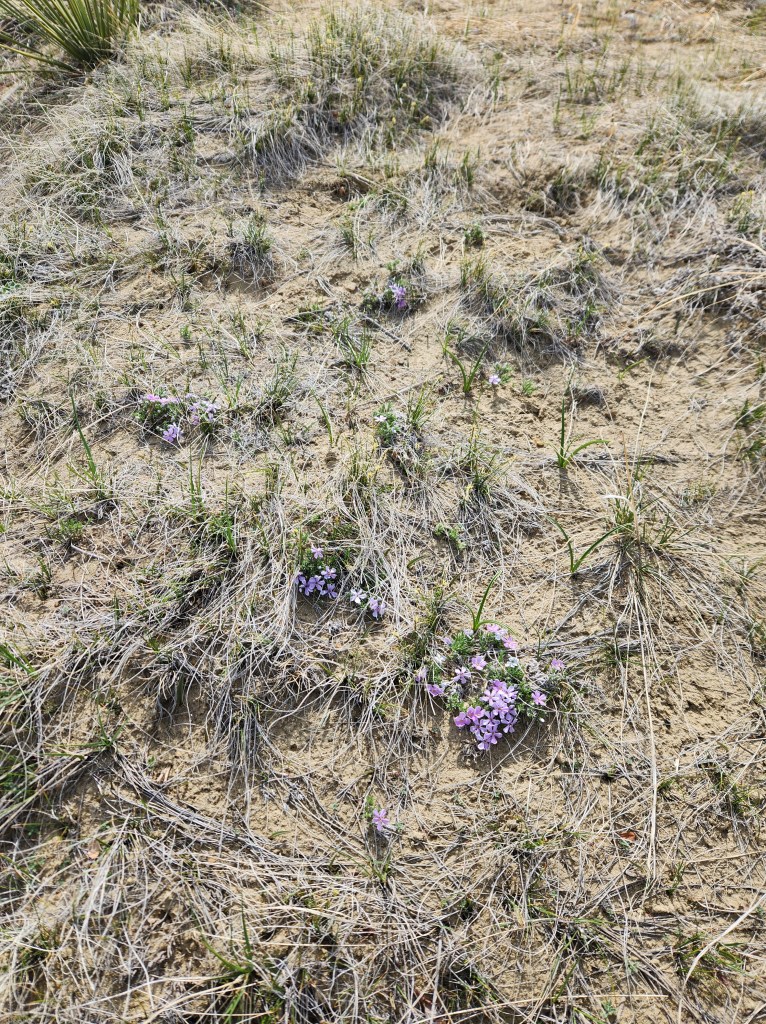
Walking across the pasture, I glanced away from the grand vistas just in time to see a small patch of phlox I was about to step on. This first flower of spring blooms low to the ground in small mats. It immediately brought to mind Aldo Leopold’s tiny flower, Draba, his first sign of spring.
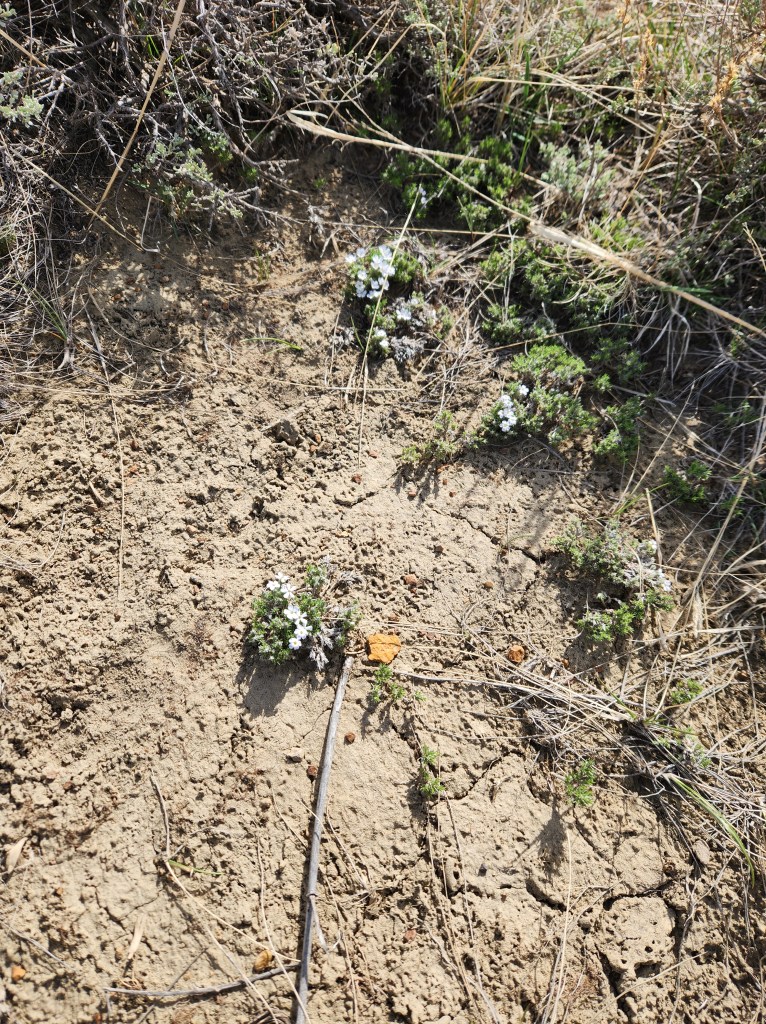
In Sand County Almanac, he a dedicates a half page of his April entry to this humble flower that botany books only give a few lines, never a picture. He writes, “He who hopes for spring with upturned eye never sees so small a thing as Draba. He who despairs of spring with downcast eye steps on it unknowing. He who searches for spring with his knees in the mud finds it, in abundance” (26).
Phlox is a simple flower, easy to miss, but luckily it doesn’t demand that I kneel in the mud. Not that I’m above all that. I kneel in the mud to feed a lamb or vaccinate a calf. I’m just not a committed enough student of botany to bother. But I love Leopold’s close attention that gives him a secret knowledge, access to a sign of spring most everyone else has missed. Even if I’m not nearly as committed, I’ve found my own first sign of spring, a promise that thing are growing again.
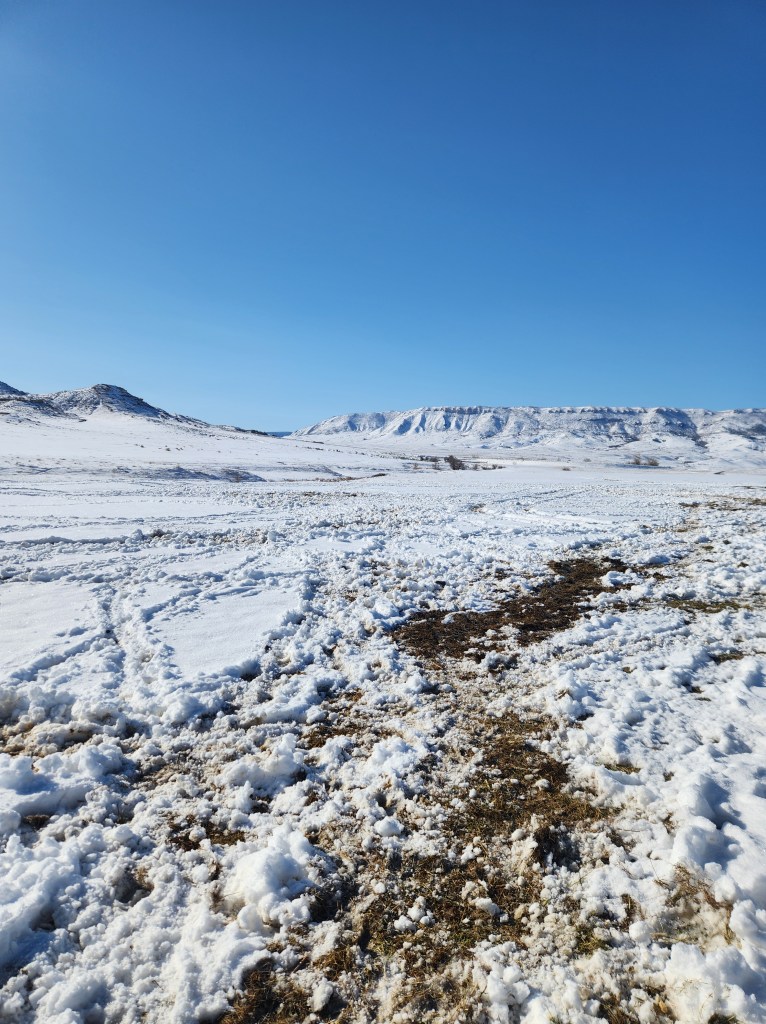
The next weekend, the pastures—green grass, phlox and all—were covered by a blanket of fresh, wet spring snow. But the stops and starts are all part of spring as well, and plants are all well adapted. It makes another great postcard.
 Vegetarian Ranchwife
Love this! The way you describe writing first as ” I’d found everything so astonishing that I’d wanted to tell the whole world about it.” and then to notice the small, easily-missed things. That’s something that I love about writing–how I notice those small things and think about how I might describe them. Even if the descriptions never make it to the page, my life feels fuller for having noticed. Beautiful photos too. I love phlox!
LikeLike