January 5th marked the 100th anniversary of the swearing-in of Nellie Tayloe Ross as the first woman governor in the US. It came and went with little attention. I only caught the story scrolling through my news feed a few days later.
But local news outlets gave Ross her due. We Wyomingites are proud of our moniker, “The Equality State,” and we’re happy to boast our feminist firsts—first to grant women full voting rights in 1869, first woman governor—whenever we can. In a Wyoming Alphabet, a book I used to read to my kids, “F” is for these firsts.
For Kem’s family, the title “First Woman Governor” has been a point of contention. They argue the honor belongs to their great-grandmother, Jean Brooks Lathrop, who served as stenographer for her father, Governor Bryant B. Brooks. In 1910, he took a trip abroad, leaving Jean as acting governor. One newspaper article* at the time made sure to point out that while Jean acted out her duties, she didn’t let the responsibilities taint her femininity. In the most pandering tone possible, the article stated that she even made time to ride her horse.

Perhaps because of this family rivalry, I thought Ross had simply “inherited” the governorship from her dead husband, and, after serving out his term, was unable to win re-election. In every photo I’ve seen of her, she’s wearing elegant 1920s dresses, her look polished with hats, jewelry and furs.
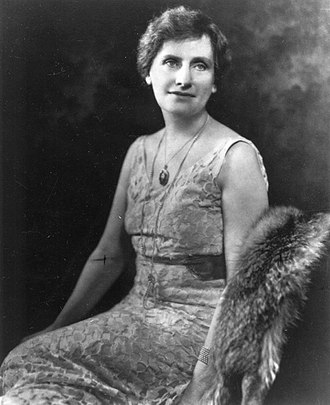
I can see now how my dismissal stems from the same prejudices the reporter held against Kem’s grandma, Jean. It assumes a woman can’t walk and chew gum at the same time. She can’t enjoy her horse rides and work in government. She can’t dress well and be a serious political candidate.
But there’s nothing that says you can’t be well-dressed and also serious about politics. Plenty of men are and, apparently, Ross was was. When her husband died in office, she was approached by the state Democratic party to run for her husband’s seat. There were easier options for her. There was some talk of giving her an annuity or a job as State Librarian, but, her brother who was visiting while she deliberated her decision, noted in a letter to his wife that “no one wanted it more.”
And Ross did win the election, with, in fact, a larger share of the vote than her husband had. She had run, wearing black as a mourning widow, wanting to finish what her husband had started. She was also buoyed by excitement over electing the first woman. The same year she ran, another woman, Miriam Ferguson, was running for governor of Texas. Ferguson also won her race, but was sworn in two weeks after Ross.
Wyoming Senator John Kendrick argued that because Wyoming was the first to grant women the right to vote, it should be the first to elect a woman as governor. Ross campaigned on the slogan, “Beat Texas to it!” Or rather, others campaigned on her behalf. As a woman in the 1920s, she had to be careful to hide her ambition.
And ambitious she was. As governor, she went beyond her husband’s agenda and passed her own causes in the single legislative session she had available to her, including protections for miners, child labor laws, clean water laws. In her re-election campaign, she took on an exhausting schedule, speaking for herself this time.
Her ambition likely cost her re-election as governor, but that wasn’t the end of Ross’s career. Her name was put forward as a possible Vice Presidential candidate, and, while she didn’t win, she was the first woman to ever be considered. She became the first woman director of the US mint, a post she held for 20 years, again, another record-breaker.
Ross fits easily into popular feminist narrative of a woman ambitious beyond the cultural conceptions at the time who goes on to show everyone that a woman can do this stuff just as good as a man. I love that narrative. Women have had to live under limiting preconceptions of what they can and can’t do and that’s bullshit. But there is another narrative in Ross’s story that’s harder to tell, and that’s how her role as caregiver continued to pull on her.
For Ross, like the suffragettes of her time, those roles were a vital part of their campaign. As I was digging through her story, I was most touched by a 2007 PBS documentary, Nellie Tayloe Ross: Governor First, where her grandchildren and great-grandchildren share family anecdotes and read from her letters. In that documentary, we see the pull between her political ambitions and her role as a mother.
In one poignant letter to her son, she writes, “I’m making this discovery that no man governor has the demands made of him that are made of me.” She laments the endless interviews and that she must be nice to everyone. She expresses pain at being so far from her children, two grown and one twelve-year-old, and that she didn’t have more time to write them all.
As popular feminist narratives are happy to tell about women taking on traditional men’s work, it feels like they ignore traditional women’s labor in ways that feel just as dismissive as Jean Lathrop’s newspaper article. Afterall, whoever does the governing, someone still needs to care for the children, cook the meals, do the laundry. Bryant Brooks understood this, and, in his memoir, gave a tip of the hat to his wife, Mary, saying that she “manages our home with the efficiency and harmony of a well-disciplined business.” This was high praise coming from a man who said very much the same thing about how he governed the state.

But maybe I shouldn’t put all the pressure on Feminism to acknowledge the labor of care. I should put as much pressure on men governors (or CEOs, or whatever) to worry about how much about how their jobs take them away from their families as Ross did. After all, if a woman can do these traditional male roles as well as any man, men can do care-giving labor as well as any woman.
*I’m working from memory. Once I locate the article, I’ll include a citation.
**Title picture, Nellie Tayloe Ross being sworn in as governor is from the Wyoming State Digital Archives. I swiped the posh flapper picture from Wikipedia.


Yes! Double, triple, quadruple standards are starting to be recognized, and awareness is the first step. But lots of progress remains to be made. Thanks for an enlightening take on the topic, and I love the nod to Kem’s great-grandmother! And the photos!
LikeLike