When I came across Helen Rebank’s memoir, The Farmer’s Wife: My Life in Days, I thought: Well, shit, she wrote my book!
She gives us a glimpse into the daily life of a farmer’s wife, getting kids to school, checking on livestock and feeding a hungry family. She’s a champion of the unpaid and invisible household labor, a topic close to my heart. Growing up next to the Lake District farms, she’d never wanted to be a farmer’s wife, but between the lovely scenes of her daily life, she tells the story of how she got there, how she came to love the life and how hard both she and her husband, James, worked to make it happen.
Like many readers, I came to her book because I had loved James Rebanks’ two memoirs: A Shepherd’s Life: Modern Dispatches from an Ancient Landscape and Pastoral Song: A Farmer’s Journey. Both books are concerned with farm labor and its history, another kind of hidden labor, and the farmer’s relationship to the environment.
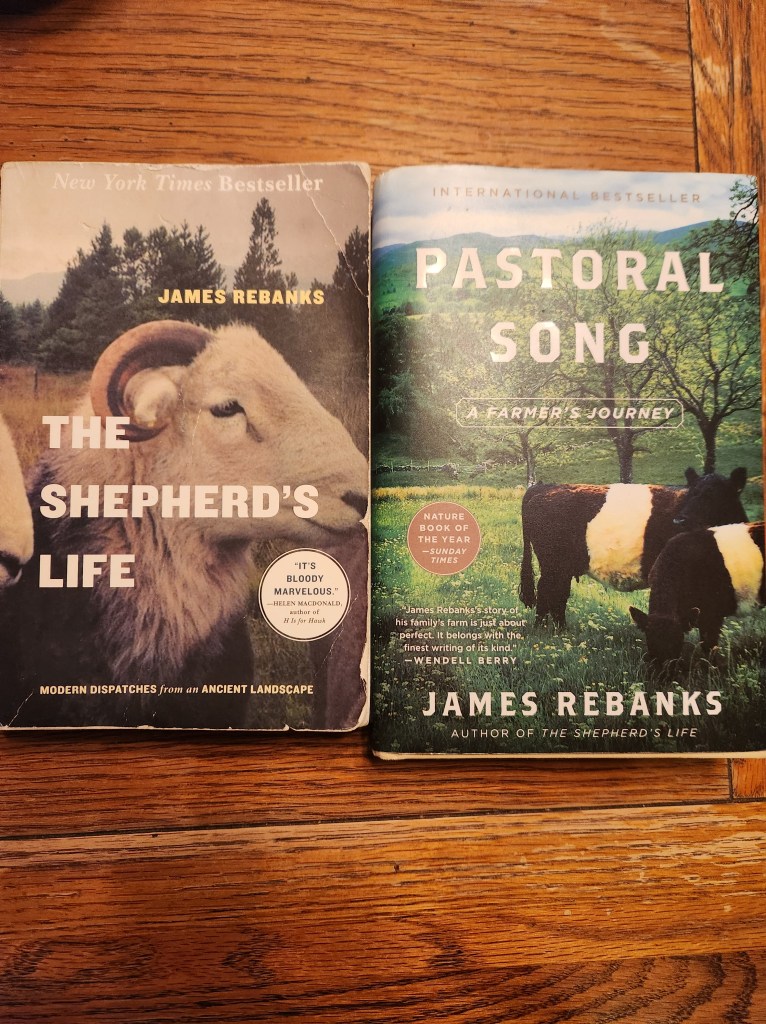
In A Shepherd’s Life, James writes of his grandfather, whom he admires, “He was, and we as his descendants remain, essentially nobodies as far as anyone is concerned. But that’s the point. Landscapes like ours were created by and survive through the efforts of nobodies.” We get a close look at those nobodies, in all their idiosyncrasies, going about their daily chores, and come away with a new respect for the work that’s so often ignored (I may have already had bias or two towards farm labor). These nobodies keep an eye on soil health and invasive species; they take care in selecting breeding stock for the animals that feed our planet.
Helen Rebanks does something similar with domestic labor, imparting the lessons she’s gleaned from feeding and caring for a family. The book is filled with food, and we see that Rebanks sees nourishing her family and community as a vocation. While she certainly has a taste for fine food, like the Dauphinoise Potatoes, inspired by a stay in France, or Lamb Empanadas inspired by a trip to Chile, she’s equally happy to tell us about the meals she cooks on a camping stove while the kitchen is under construction. Food is a necessary to daily life, and even when short on time or under difficult circumstances, she wants strives to make it a pleasure.
Amidst all the recipes, she includes six ways to make eggs. And in her Helpful Lists, at the back of the book, she includes “Meals For When I’m in Survival Mode.” The food is all part of a real life, what is nourishing in that particular occasion, but even with the simpler foods, there is thought and care.
While much of her everyday life is idyllic, Rebanks isn’t afraid to show us the gritty side. She writes honestly of life with babies, her exhaustion trying to keep up the appearance of a perfect house—a nurse tells her to “leave the bloody cushions alone” and take care of herself—while James is working himself ragged to afford the farm of their dreams, first at a desk job he hates, then as a consultant.
There’s a particularly memorable passage where she pops into his office with a teacake one afternoon, asking if he’s nearly finished. In the ensuing fight, says, “For fuck’s sake, what planet are you living on? I don’t get to play teddy bears’ picnics in the garden with my friends while someone else pays the bills.”
She tells him to fuck off, but he hit her where it hurts, not bringing in an income. We’ve seen throughout the book how hard she works making a home, keeping everyone fed and cared for, and a few pages earlier, she’d had a conversation where she talked about how impossible, it would be to have a job that would justify childcare, and yet still, the value of a homemaker is difficult to articulate, even to the person doing the labor.
It would have been easy for Rebanks to write about her delicious meals, along with all her recipes, give a few anecdotes of kids with livestock and leave this bit of mess out of the picture. It took real guts to include it, and, besides making us human women feel a bit better about our lives, it also helps us account for the true cost of the hidden labor. It remains hidden because most of us aren’t willing to let anyone see our most vulnerable moments.
In James Rebanks second memoir, Pastoral Song, he pays closer attention to the role his mother and grandmother had played in farm life, and I couldn’t help but think this had everything to do with Helen’s influence. He describes his grandmother’s kitchen that “became a jam factory every autumn.” She was a woman who cooked all their meals almost entirely from food that she had grown, looked down on food bought from the shop.
Then there was Rebanks own mother who loved mucking out the cows’ stalls but “resented the endless drudgery of housework.” She was an embarrassment for Rebanks grandmother, who thought that if a woman was working in the outdoors, the men had failed to do their jobs.
I’ve been thinking lately about all the different ways to be a farmer’s wife—or rancher’s wife, in my case. I’ve been writing about my own crash course in living on a ranch and the implicit gender roles that came with them. Kem had role models for how to do his work in his dad and the other ranchers he met, but the domestic side of things remained largely hidden. I imagined the ranch women as these superwomen who did it all. I had it in my head that I wouldn’t be a ranchwife if I didn’t ride a horse. I worked at it, and I guess, if I had to, I could ride a horse. I’d rather not.
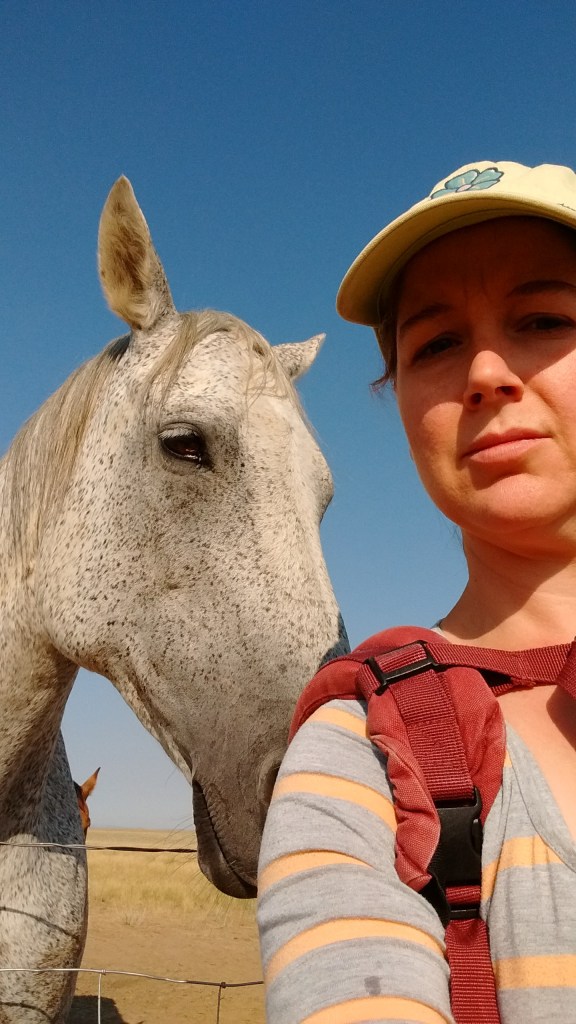
I thought of it as a failing, another way I’d never measure up to real ranchwives. Then we went to the funeral for the mother of a neighboring rancher. She was the larger-than-life ranchwife who fed huge work crews, spent her summers bottle raising baby animals, even when it flouted city ordinances. And at the funeral, people were laughing over stories of her legendary aversion to horses. Turns out you don’t have to ride a horse to be a real ranchwife.
As we tell more stories of what the women are up to, we see how many different ways there are to be a ranchwife, or a farmer’s wife. I fall more along the lines of Rebanks mother. Housework is an absolute drudgery. I do as little as I possibly can. I like to cook, however, I like to feed people around me. I’m no Helen Rebanks, but my cookies are pretty awesome. Come by my house and I’ll make you a wicked espresso.
It’s only as I started writing about my own experience that I’ve come to accept that there is no ideal ranchwife, no ideal farmwife. Every woman comes to the role with whatever skills she has on hand, and the pieces of her life fall into place around that. She plays to her strengths and muddles through the rest. It’s easy to talk about our strengths; it’s hard to show the mess where hidden labor lives.
So no, Helen Rebanks didn’t write my book. Her strengths are certainly different from mine, and her mess is different too. I’ll keep writing about mine, one more small life devoted to simple domestic tasks. I hope in the process to continue to bring hidden labor into the light.
 Vegetarian Ranchwife
I loved her book and his as well. Keep up your writing. I hope to read yourb book one day. Also, we enjoyed your visit to Highlands church. Your message was lovely,
LikeLike
Thank you so much! I loved Highlands Church. What a welcoming, inclusive community!
LikeLike