As the pastures fill calves, I’m reflecting on the hardiness of this new life and the good instincts of their mothers. Do I say this every year? Probably. I’m saying it again.
I saw the first calf on the feed grounds out North on a morning when the temperature hovered just a bit north of 0. She’d been born earlier that week, but still, in this ridiculously mild winter, she managed to get experience an arctic blast in her first week of life.
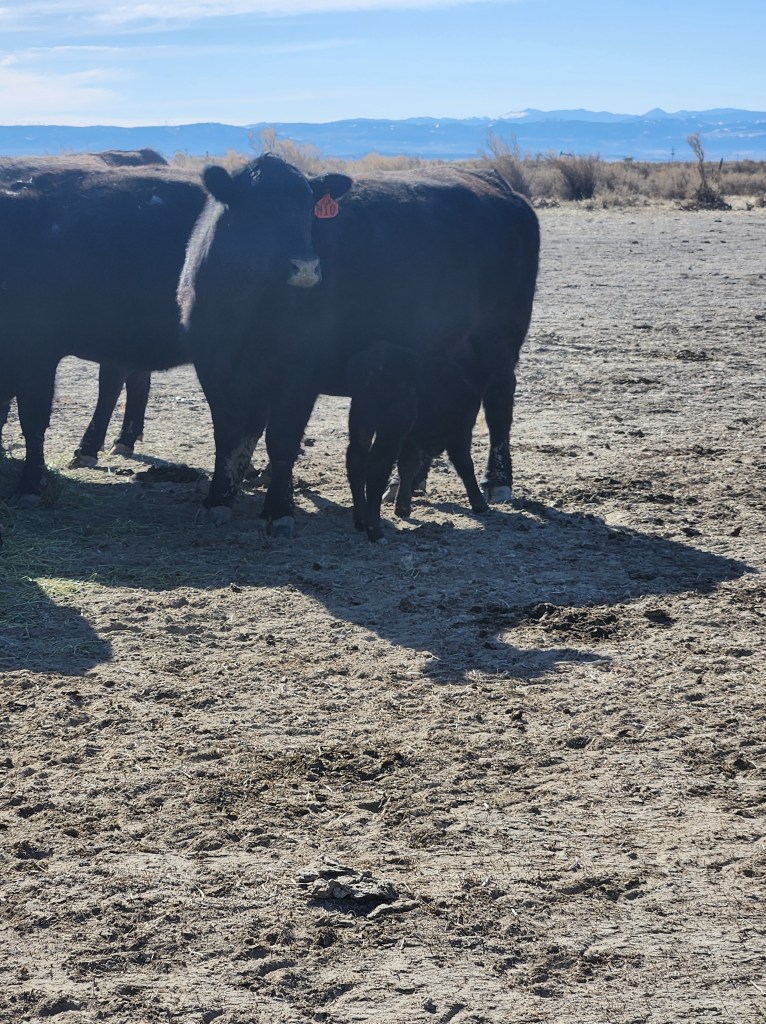
She wasn’t the first calf of the year. Our heifers had been steadily dropping calves for a few weeks already, and our farm cows, the ones who need a little more TLC, had already started calving. But since we see spend every Sunday morning feeding the cows out North, I use their progress to map our yearly cycles.
In subsequent Sundays, we saw a trickle of new calves and now the feed grounds are full of bucking calves chasing each other. The pastures are still brown and dead, there is snow in the forecast, but all this energy takes the gloom and the bite out of the weather.

It seems strange to calve this time of year. The heifers, the first-time moms, start sometime mid-February, but because they’re watched around the clock, if a cow looks like she’ll calve on a particularly cold night, we’ll put her on the barn. That first year teaches them how to mother, and they’re gonna need it, because every year after that, they’re on their own.
I’m sure it seems strange to outsiders that calving begins in February when we frequently get sub-zero temperatures and all through March, our snowiest month. This isn’t the only way to do it, but, for a lot of complicated reasons, this is the way we do it. Most importantly, we do it because it works. These little guys are tough enough to live through Wyoming’s brutal weather.
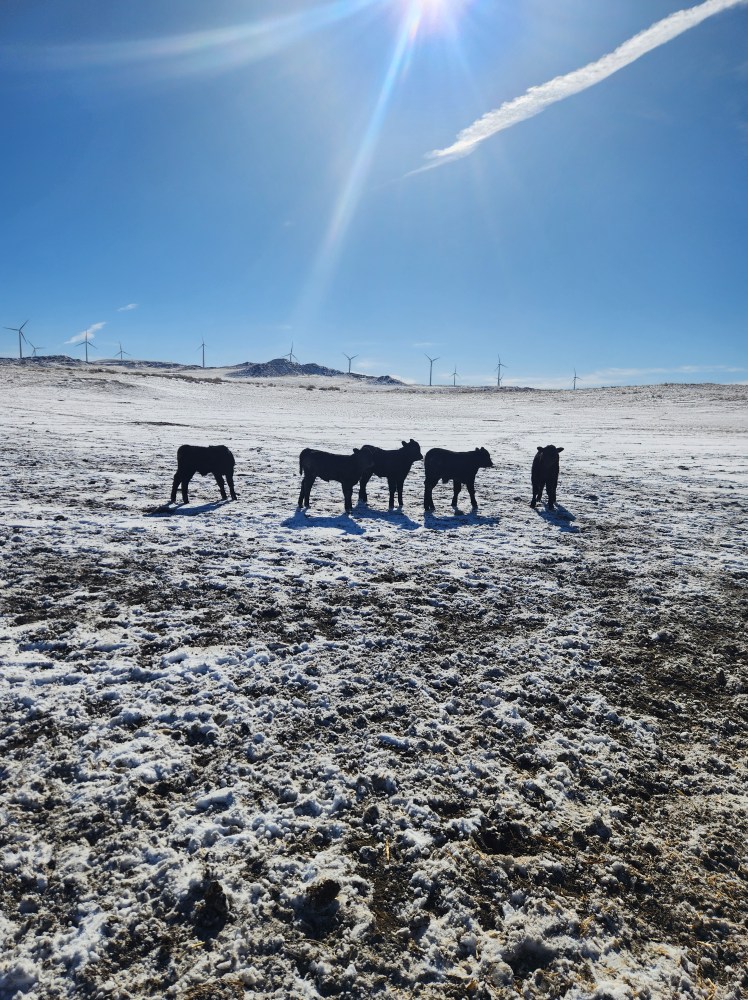
Even a few years ago, during our epically brutal winter two years ago, that inspired my essay, Fimbulwinter, we miraculously didn’t lose calves to the weather. It’s not just that their hardy genes; we need to give some credit to their mothering. The cows hunker down in the heavy brush when they’re getting ready to calve and they keep the newborn calf tucked down in there until the weather improves.
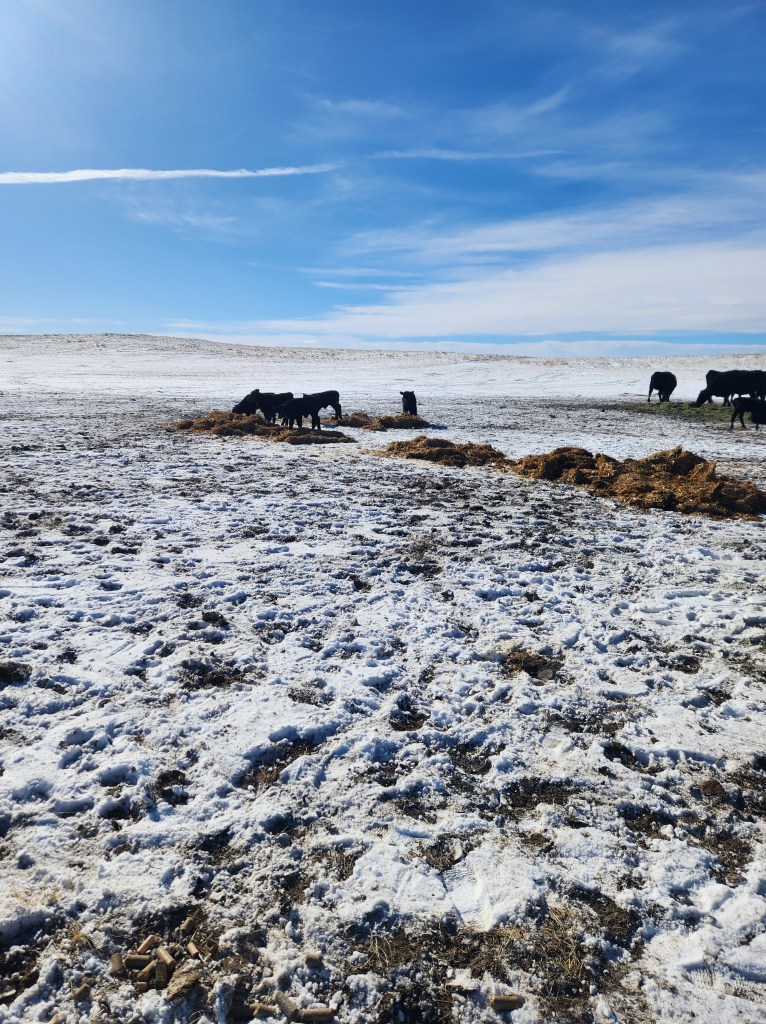
And, of course, the humans look out for the cows and calves too. In the first year of labor-intensive calving, the heifers learn to bond with their calves and hone their mothering instincts. Even when the cows calve on their own, they still have humans looking out for them. On snowy days, Kem likes to kick out a bail of old, moldy hay so the calves have a dry place to bed down.
The calves don’t necessarily come through unscathed. At branding in 2023, as I was inserting an implant in the calves’ ears I noticed how many had lost the tips to frostbite. It’s hard to see, when you’re a soft touch who likes to know the calves have a dry place to bed down. But, the little guys survived the hardest winter I’ve ever seen. Those mangled ears were one more reminder of just how resilient these calves are.
 Vegetarian Ranchwife