Shearing, Kem and I believe, if it does not fall on a weekend or Spring Break, warrants a school holiday. It’s a day spent in a barn, which, I’ve insisted, is a necessary antidote to the daily grind of schedules and classrooms. Also, it’s one of the most important ranch work days we have, and, if we have any hope that the next generation will continue this lifestyle, they need to be a part of it. Besides, it’s just fun.
This year, shearing started on a Monday, and, because uncertainty is central to the tradition, we weren’t confident of the start time until Sunday afternoon. Actually, we weren’t confident until Monday morning when the shearing crew kicked the first naked sheep out shearing trailer doors. We’ve had a string of bad years that have shaken our confidence.
When the kids and I got to the barn Monday morning, my younger two immediately wanted to show me was the museum they had made on the old sheep chute inside the barn. I’d dropped them there the day before while Kem sorted sheep, so I could get the food ready. They’d spent the afternoon picking up detritus from around the barn, a collection that spanned decades, all the way up to that very afternoon.
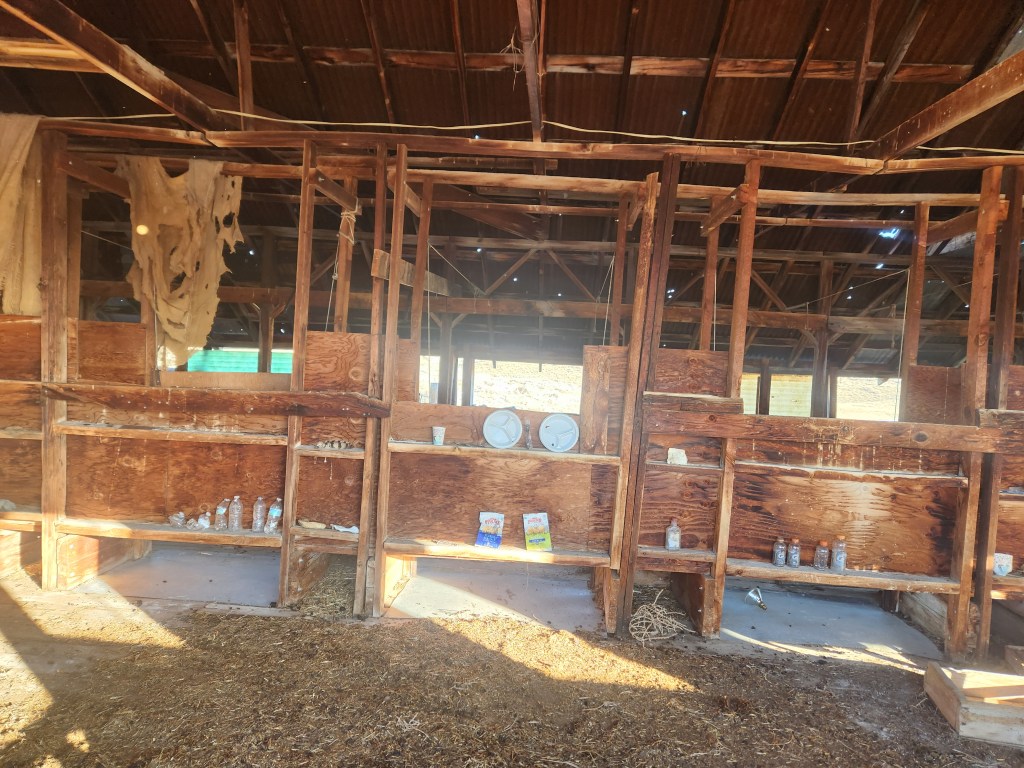
As they gave me the tour, I thought it was fitting. Archaeology is, after all, a collection of trash, what’s left behind from people who occupied that same space. People hang on to the stuff they value and hand it down to the next generation. The pottery of a real museum is just like this stuff, discarded food containers, for the most part.
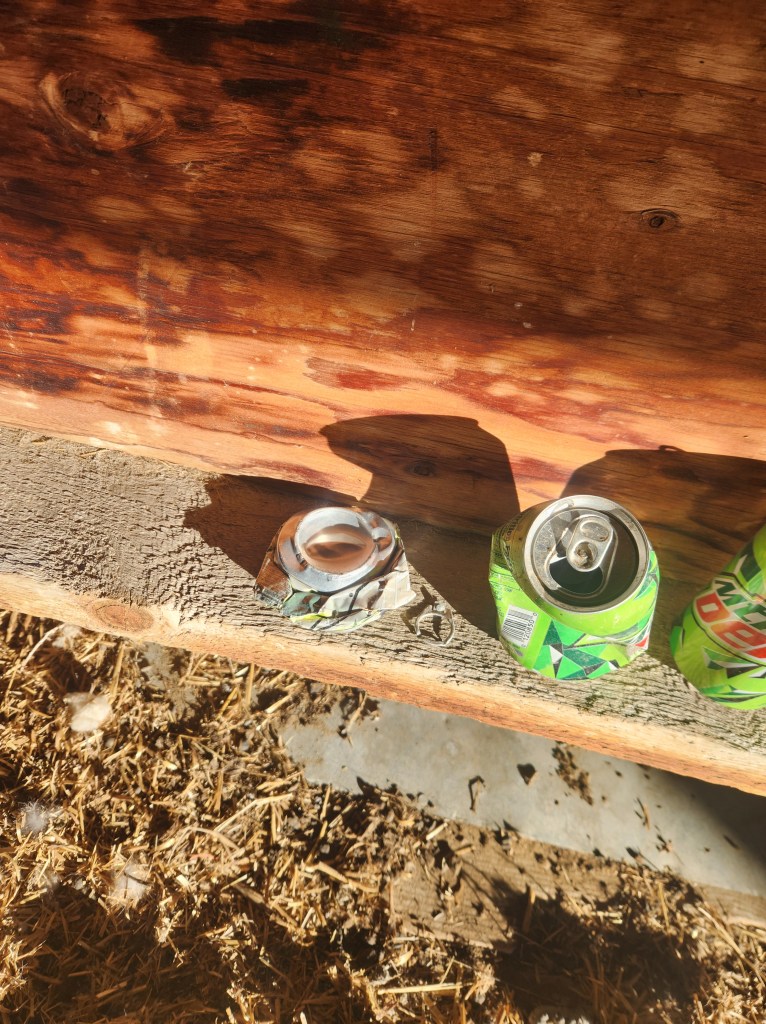
The kids were, in fact, archaeologists sifting through layers of trash in a barn that has been used since the 1930s. They found real artifacts like an old (whiskey?) bottle of unknown vintage and the above pull tab from the ’80s, or, as my kids say, the 1900s. They may have skipped school, but I think there’s academic value here.
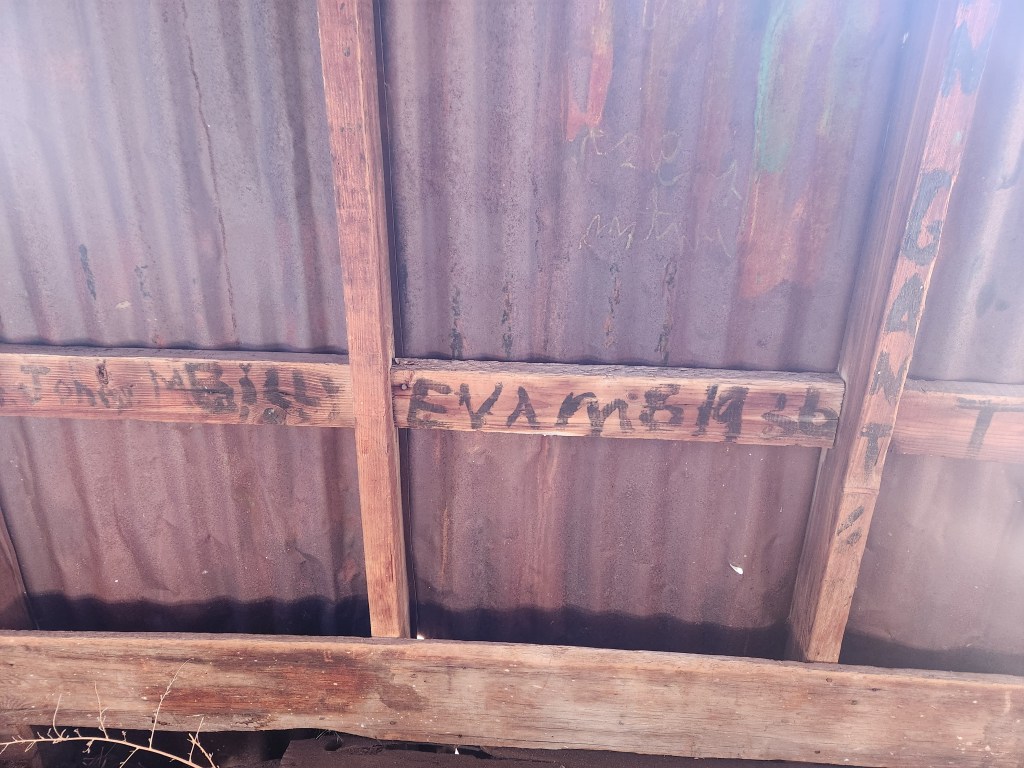
The shelves where they made their displays were, themselves, artifacts: the original sheep chute. Each of the panels is the back of an old shearing station. Sheep ran down the middle, and a shearer, standing on the other side, would step down on the panel, pull a sheep through and shear it. Since I have been here, for almost 20 years now, shearers have arrived with their own trailer, but Kem remembers shearing in here when he was a kid, you know, in the 1900s. The names of the shearers are painted and carved in the walls of the barn, another museum display.
Most of our day, however, was not spent musing on the trash left in the old barn; it was spent in hard labor. The kids have always been involved in the work around shearing: they wave flags and run down the alleys to keep the sheep moving; they pull wool off the sorting table; they stamp down the bags holding the bellies and tags. But in many years past, they did these jobs, briefly, before running off to play in the barn and eat as many cookies as they could while their parents were distracted.

This year, all the kids found jobs and kept themselves busy for the entire day. When the oldest wasn’t helping the wool sorters, she was out back, gathering the unshorn sheep into the holding pen. My middle child spent most of the day with me, keeping the sheep moving into the shearing trailer. It’s hard work. They don’t like stepping from the dirt and wood to the metal chute, or from the sunshine into the dark trailer. The youngest was stomping down the wool for the sorters, and bringing everyone cookies and water bottles. He thought it was outrageously funny to bring his mom four water bottles and then take them all away when she wasn’t looking. It’s a 9-year-old boy thing, I guess.

I decided I wanted kids, even the boy who lives to tease his mother, in large part, because I wanted to pass on this experience. When Kem and I moved back to the ranch, it didn’t take long to realize the long tradition we’d stepped into, the generations of work that made our life possible.
In his book, A Shepherd’s Life, James Rebanks describes a similar realization. As he listened to his grandfather’s stories he knew “we were part of a tradition, that long pre-dated us, and would long exist after us. These stories left you feeling proud to be part of that tradition, but very aware that as individuals we were bound by duty to carry it on, bound to try and live by those values.”
For me, the duty to carry on those values meant sharing them with the next generation. And, with that intention, we’d drag the kids to every workday, shipping, shearing, branding, docking. It took some faith, as they’d put in their five minutes of work then run off to go play, to think that they were learning anything about this life at all.
I have a wise friend who knows a whole lot about child development, and she would assure me that the kids were watching and learning. Finally, thirteen years after the birth of my first child, I’m starting to believe she was right.
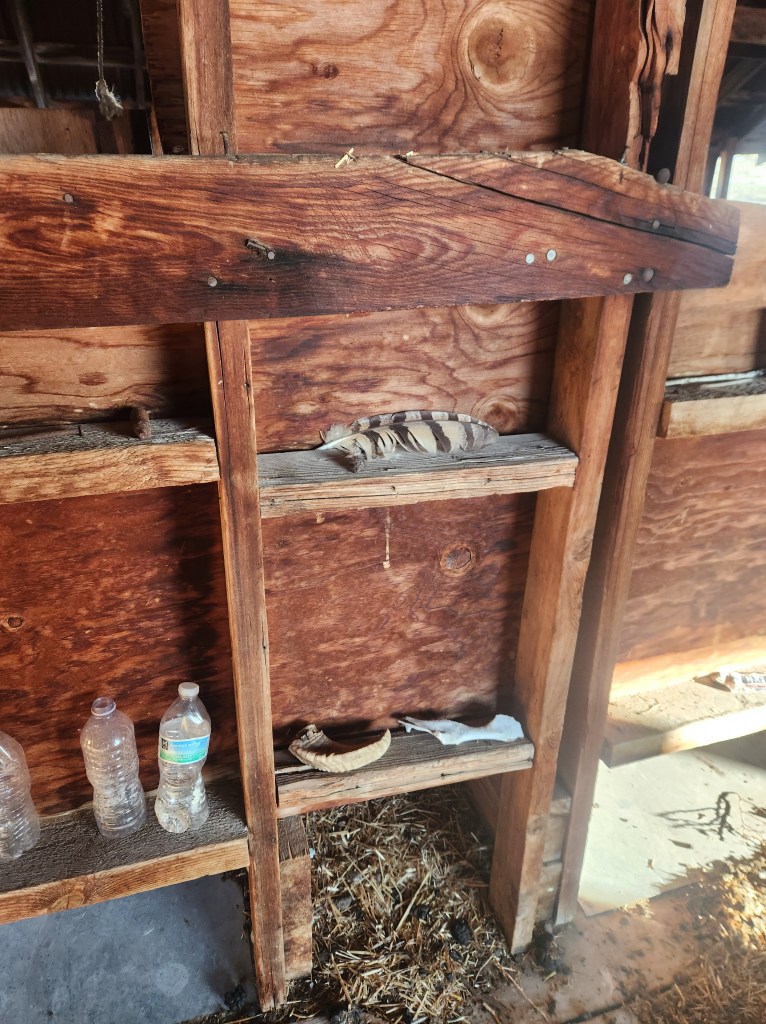
As we spent our day in the work of shearing, as we stuffed our chip bags into the the designated trash bags only to have the wind rip them out, as we set down our water and Gatorade bottles only to forget all about them, we left another strata of archaeological treasures in this old barn. One more generation leaving their mark on this place. And besides, we all had fun.

 Vegetarian Ranchwife