Every year in late May, I begin to watch antelope, paying close attention to the does who stay put rather than running from the sound of the approaching vehicle. I scan the grass, looking for the newborn fawn she’s protecting. It’s a ritual I began long before becoming a mother myself, and, actually, I think it was watching antelope does—and calving and lambing livestock—that made me think motherhood deserved a respect our culture doesn’t typically give it.
This year, I only watched the antelope from the main road as I shuttled kids to end-of-school-year activities. Through the windshield, I’d see pregnant antelope running from the sound of my car and knew all the birthing took place further out in the pasture. The does were at their fattest and slowest, and yet, as the car approaches, they make a quick pivot, their round bellies pulling them in the opposite direction then bolt away, reminding me that they’re still faster than everything else out here, except for the male of the species. I’ve had enough ewes tear through panels mid-labor; a pregnancy isn’t the delicate condition we’ve been led to believe.
Last week, when I saw the first I hit the brakes on the car, yelling at my kids to look. The fawn, no longer a newborn, was able to get up and run with his mom before I could get to my phone. The next afternoon, we caught sight of another pair and managed to snap a few pictures.

I’ve happened upon an antelope out in the pasture, moments after giving birth, licking her fawn clean. Startled by the sound of the truck, she ran, her still attached placenta swinging wildly behind her. She paused on the hill, watching as our truck continued on, and, when she was satisfied that the threat had passed, she circled back to the fawn tucked in the grass.
These antelope mamas pose such a fierce contrast to our typical image of motherhood, informed by placid Madonna and Child images. Years ago, on an early morning run, an antelope doe a few hundred yards away chirped at me, some powerful instinct overriding her obvious urge to flee. My dog, on a scent trail of something else, unaware of the doe, crossed the road before I could call her back. The doe, deciding this dog had closed too much distance, lowered her head and charged. My dog took notice then, and turned back around running at top speed, the antelope doe keeping pace just behind her. When the doe had pushed the dog to a satisfactory distance, she loped back to her place on the hill, turning occasionally to make sure the dog and I continued to put distance between them, which we did.

Apparently there is a new generation of mothers who want to break down our outdated mother stereotypes. I was excited to read Elissa Strauss’s essay, “What if Motherhood Was Considered as Ambitious as Real Work?” in which she challenges the notion that the “girl boss” is the hallmark of feminism. I now have her book, When you Care: The Unexpected Magic of Caring for Others on order. Drawing on her journalism career, she examines how fundamental and powerful care work is, and why it’s so often invisible.
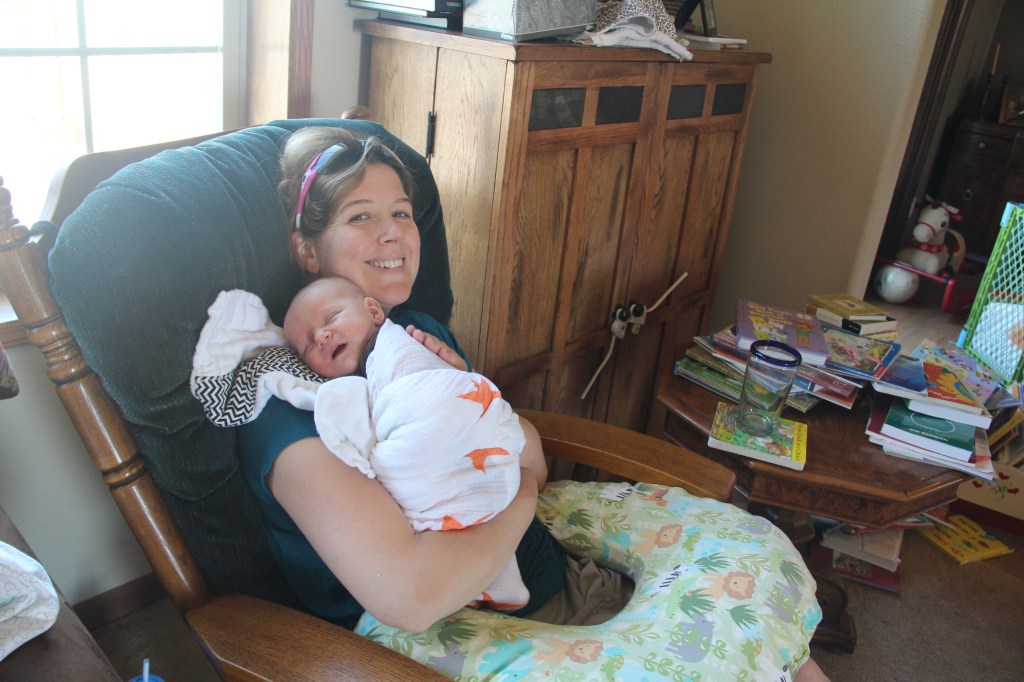
For the past year, I’ve been working on a memoir about learning to be ranchwife, which has forced me to think seriously about women’s labor—for which, of course, motherhood is central—and all the ways it gets overlooked and denigrated. I’d love to do my part to get the word out: it’s kind of badass to be a mother.
 Vegetarian Ranchwife