Another shearing is behind us, a year’s wool crop bagged and ready to ship. It’s one of my favorite ranch jobs, a chance to get my hands in the fleeces. I love any work involving our livestock, any chance to spend some time around the animals, but as a vegetarian, it’s the one thing we produce that I can get excited about. If you can look past the dirt, the bugs and the sheep shit, the wool is gorgeous, next-to-skin quality. It has a buttery texture and the lanolin leaves your skin supple, even if you smell like sheep.
Sorting through fleeces, I see the result of generations of work, Kem’s great-grandfather who started out in the sheep business, and grandfather, who brought a prize ram from Utah home in the back of a station wagon, to Kem’s father, who had an eye for good wool and taught Kem how to dig his hands into the back of a ram at auction and look for bounce and crimp.
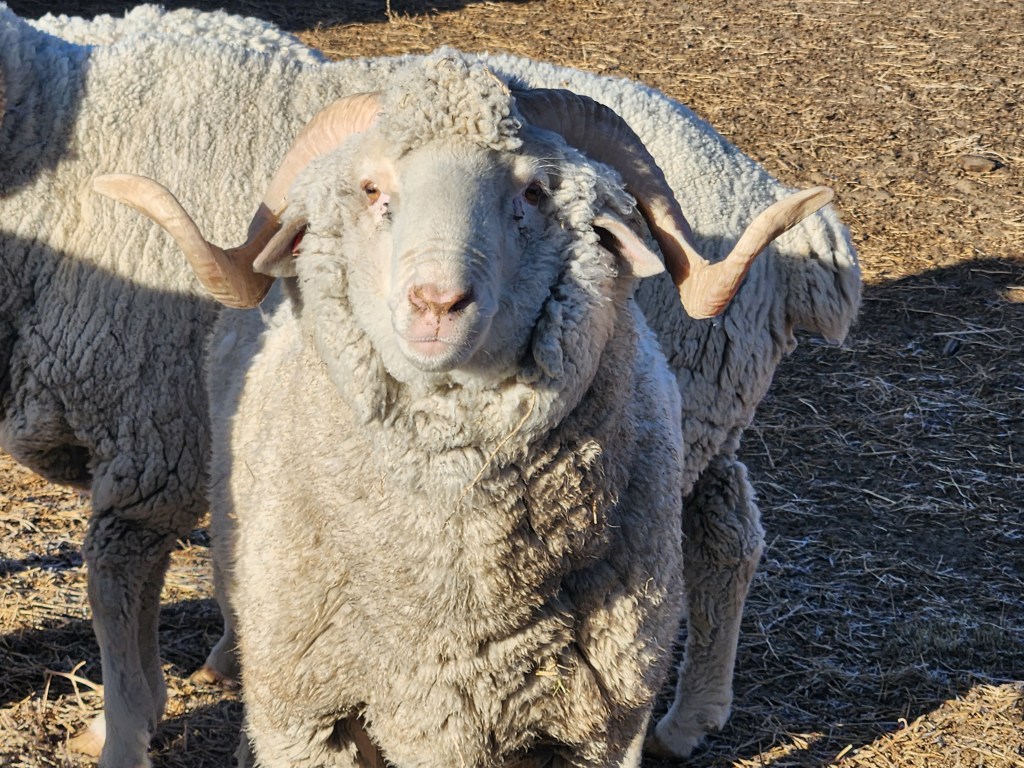
Some of Kem’s earliest memories are in the shearing barn, playing on the wool bags. My nieces and nephew, as preschoolers, used to scramble up as and down the wool sorting counter, grabbing the hard-to-reach fleeces—they’re all in their late teens and early twenties now. In that spirit, Kem and I have always let the kids take a one-day shearing holiday from school. We’ve always felt that there’s an education to be had out here, even when they’re playing in the shearing barn.
It’s always hard to figure out the balance between ranch education and actual school. The younger two spent the day walking up and down the alley moving sheep and helping to sort wool. My son said, “I love sorting. There’s so much to do. You can grab the bellies, carry the wool, pull the lever [on the packer] and ask that guy questions.” Thank goodness for a patient sorter who seemed to enjoy the company of an 8 and 10-year-old.
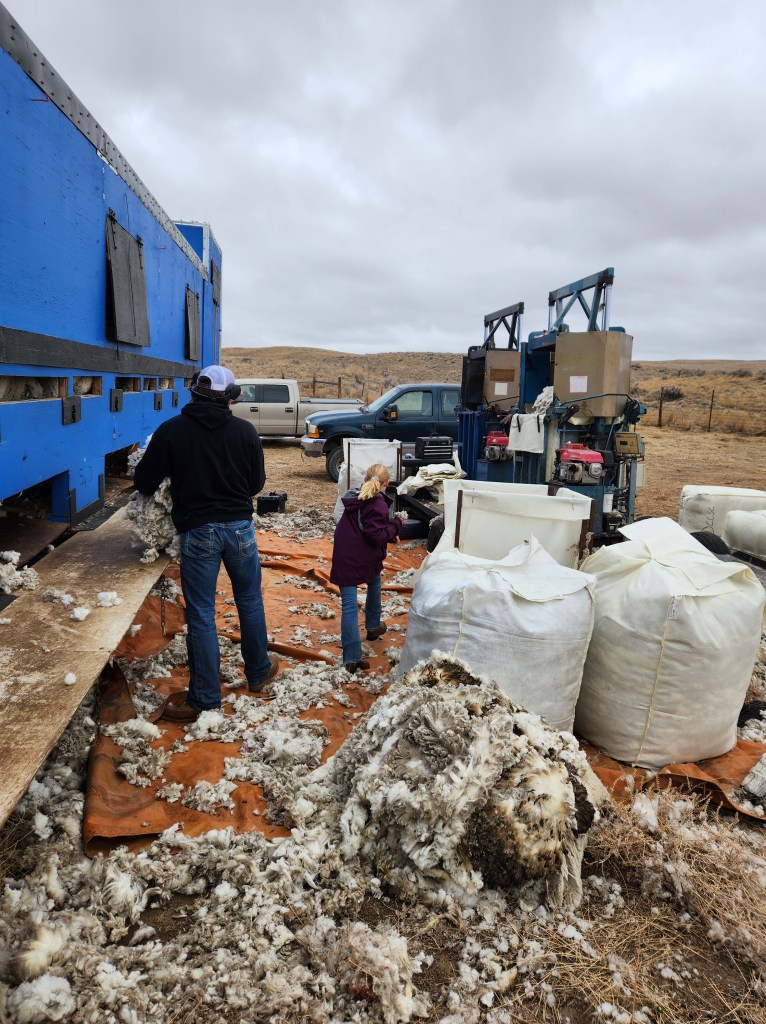
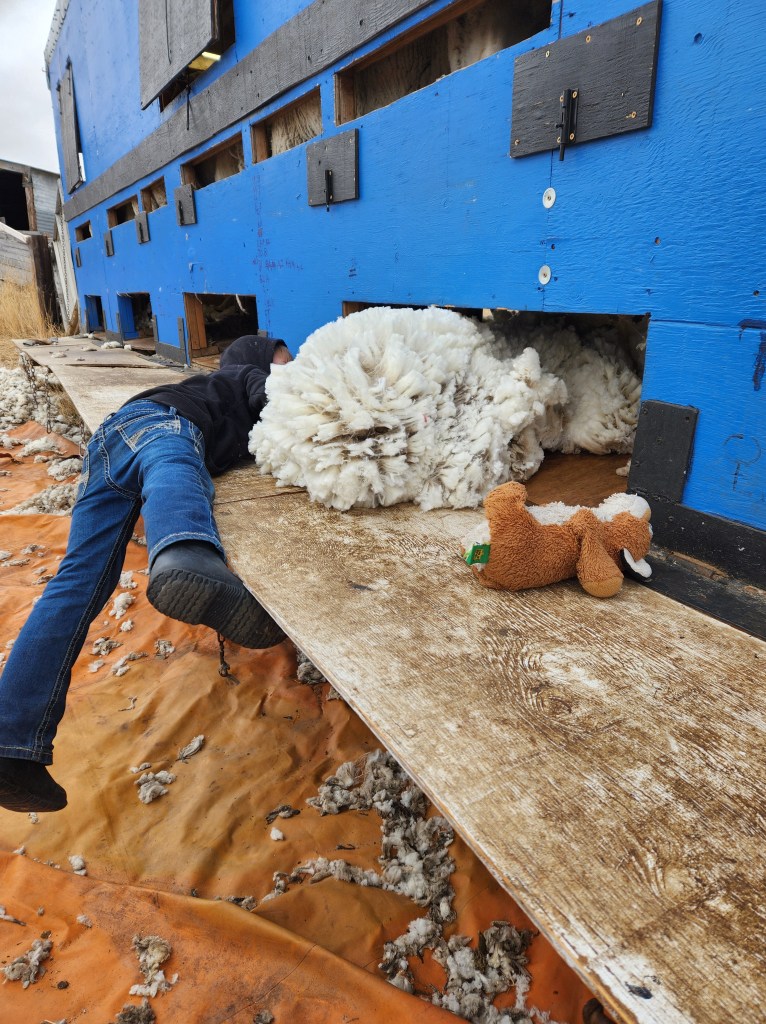
The 6th grader, however really needed to be at school. We hear all about how unfair this was, but her mood improved after school, when she could pull on her muck boots and help her dad put the sheep in the barn.
Shearing took painfully long this year—I have an upcoming essay about the uncertainty and anxiety that comes with the work. As frustrating as it was to have shearing drag on, it gave the kids one more day in the shearing barn. One ranch hand brought his three-year-old daughter, and another had his wife and three kids come out. We didn’t put the kids to work. They took turns mutton-busting, playing in dusty barn, stomping through puddles. Doesn’t matter what they got up to; any time in a barn yard is well-spent.
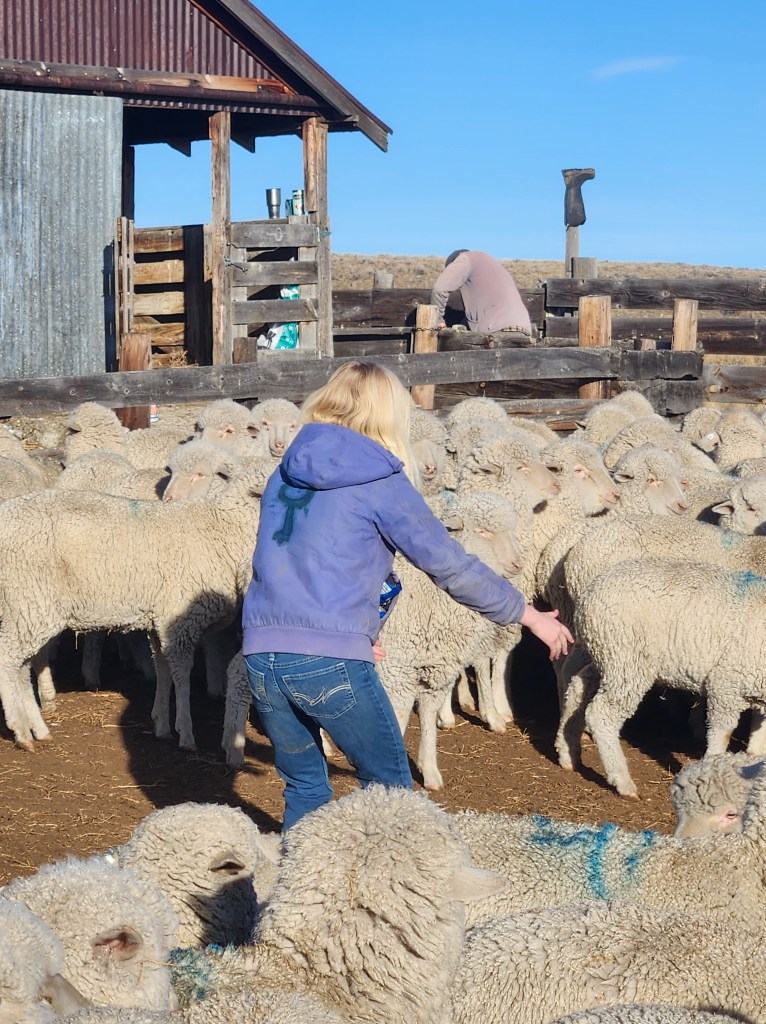
This girl finally getting some sheep time. She got the brand on her coat last shearing.
I chatted with a ranch hand while we were standing around—lots of standing around this year. He’s worked on the ranch for more than twenty years and sometimes gets depressed thinking about the future, worrying about whether another generation will want to take on this work. But, with the kids playing in the pens, he was unusually optimistic.
“These kids grew up out here. One them will want to come back and do this, maybe all of them,” he said.
It’s too soon to say what any one of those kids will do with their life. All we can do is take them to the barn, let them spend time with live animals, give them a sense of the history. It’ll do good things for them.
 Vegetarian Ranchwife