Every year, on a long weekend in the miserable belly of winter, our family escapes to Thermopolis, Wyoming, home to the world’s largest mineral hot springs. There’s nothing quite like running out the door into a 15-degree winter morning, knocking ice off the railings as you ease your way into a steaming pool. When the kids were little, Kem and I would take turns running up the outside steps to the outside water slide and taking them down, our heads and torsos aching in the cold, only the backs of our legs warmed by the magical waters. It was a major milestone when they were all swimming independently and we could sit in the Lobster Pot and watch them run up the stairs and slide back into the pool in an endless loop.
There’s an old hippy I see sometimes at Hellie’s Tepee Pool who spends entire days moving from hot tub to cooler recreation pool, barely looking up from his paperback. He wears a life jacket to float in the deeper water. I can’t think of a better way to spend your days.
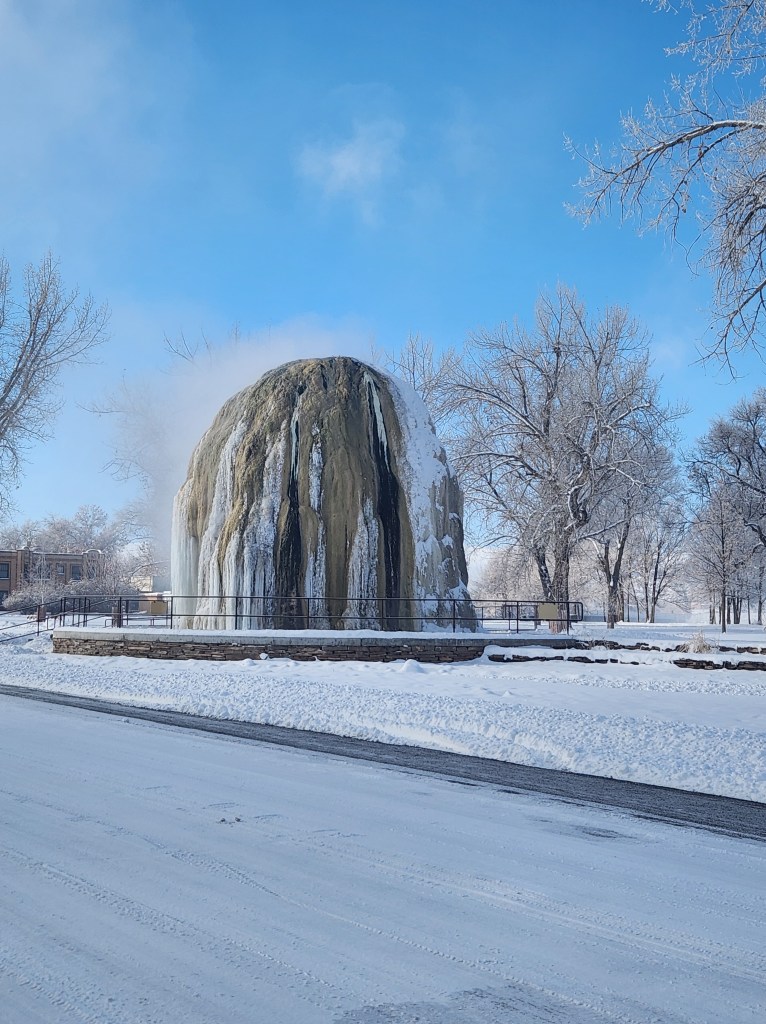
We made our trip this year over President’s Day weekend, and because this unseasonably warm winter likes to remain enigmatic, a freak cold snap offered sub-zero mornings, probably the coldest weather we’ve ever had on a Thermopolis trip. In the outside pools, our hair frosted over, and, as two young women walked by in bikinis and stocking caps topped with fuzzy balls, I heard several people murmur, “They’ve got the right idea.” There was so much steam on the outside pools that I circled the entire pool looking for my girls, and when I finally found them, realized they’d only been a few yards ahead of me the entire time.
Petroglyphs in the area attest to the fact that people have enjoyed the therapeutic value of these waters for as long as there have been people there. In the 1890s, the Shoshone tribe, desperate for money to fight disease and starvation, sold the land to the US government who was eager to open the area to settlement. In the sale, however, Chief Washakie added the condition that bathing in the waters always remain free to the public. The State of Wyoming maintains a bathhouse with a 104 degree pool where anyone can enjoy a free soak.
In graduate school, I studied with Kenneth Morrison, a professor who taught that Native American religions centered on cooperation and sociability built through sharing, a worldview completely anathema to the European profit-seeking mindset.
“The entire reservation project,” he said in one memorable class, “was to teach Native Americans that this is mine and not yours.”
He slapped the wallet in his back pocket and the Native students, sitting with crossed arms in the back of the lecture hall, all chuckled with approval. This lanky white guy knew his stuff after all.
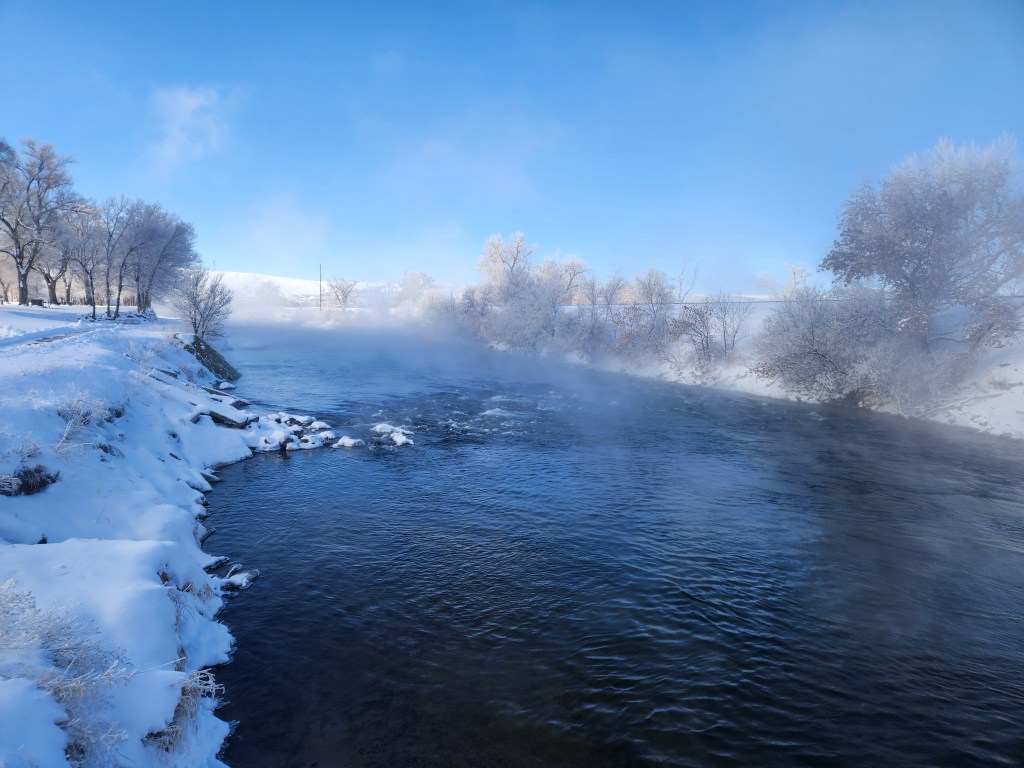
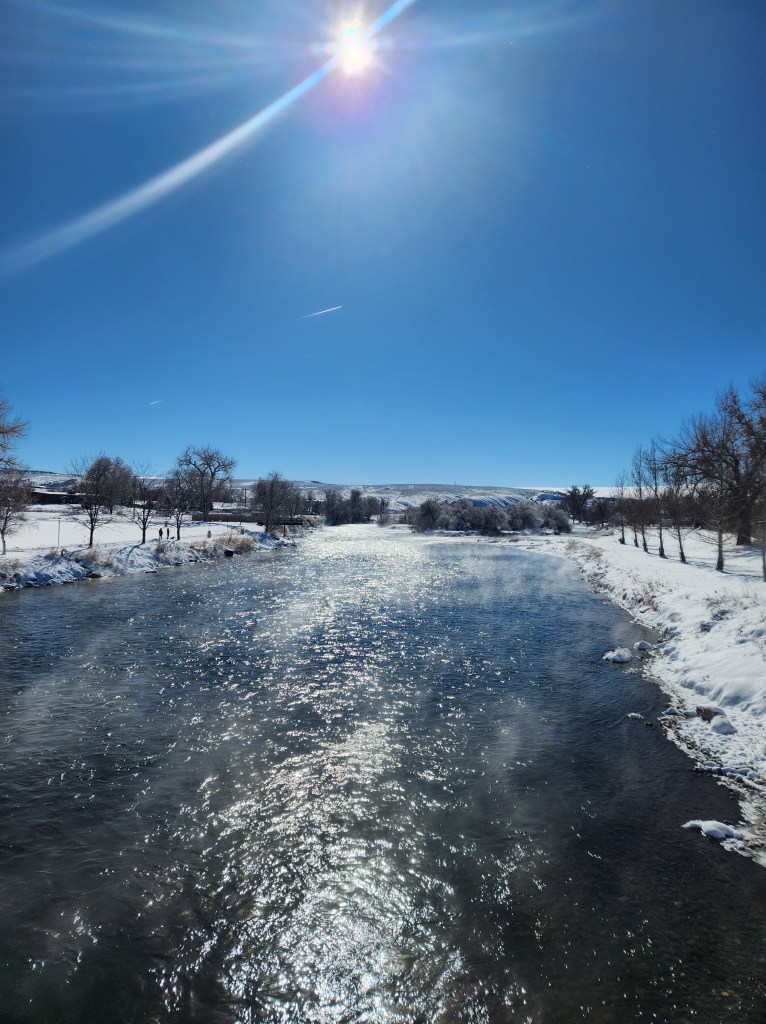
On our way to the pool Saturday morning, steam rose from the river and with the new layer of snow, it lent the landscape a sense of mystery and enchantment. I found the view so astonishing I’d yelled, “Stop.” Kem hit the brakes, fishtailing the car on the icy roads, everyone panicked.
“Sorry, no emergency,” I said. “I just wanted a picture.”
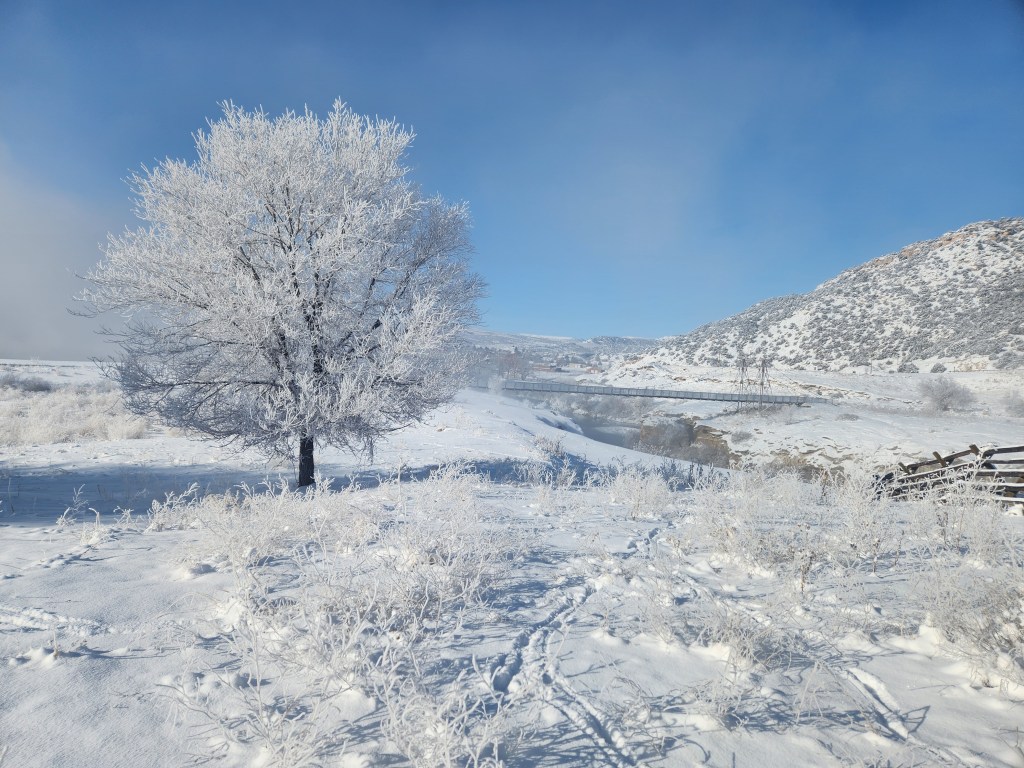
They let me out to snap some pictures, and, of course, pretended to drive away. They all got a good laugh when they circled back to me because Kem had told the kids I wouldn’t even notice and keep taking pictures. Then they watched in the rear-view mirror as I did exactly as he predicted. It’s great to have a family that knows you so well.
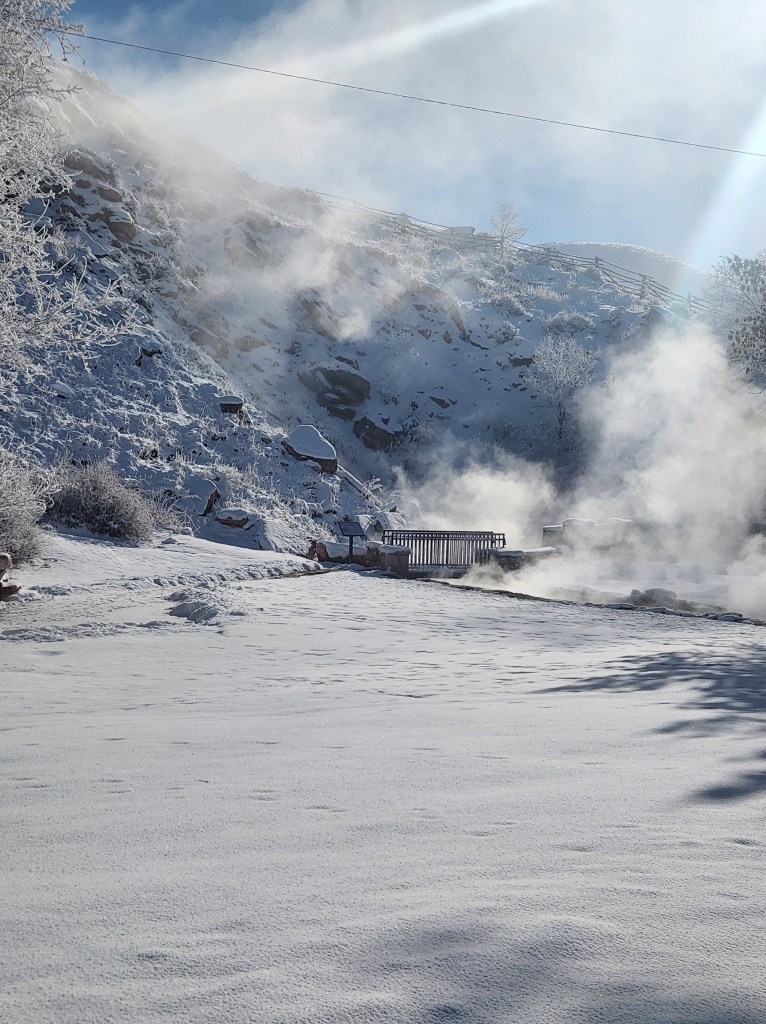
The kids did voice some protest when, just before pulling into the pool parking lot, I asked to drive up the State Park’s scenic route a bit so I could get more pictures, but the indulged me for a few more minutes before we got on with our family getaway.
We swim at the for-profit pools, the Teepee and the Start Plunge, because they have water slides and Lobster Pots, and large indoor and outdoor recreation pools. We’re as hooked on commercial luxury as anyone else. But I do love that there are gifts here that can’t be sold because they’re owned by us all: the views, the trails in the park, the water itself.
 Vegetarian Ranchwife
One thought on “Smoking Waters”